The worst thing that can happen to a youth basketball team isn’t a losing streak or a tough opponent. It is a toxic sideline culture created by well-meaning parents who don’t understand their role.
I’ve watched talented teams implode and promising players quit the sport entirely because of what happened in the bleachers, not on the court.
Your behavior on the sideline matters more than you think. Every comment you make, every reaction you have, and every conversation you start ripples through the entire team. Kids hear everything. They feel the tension. They internalize the negativity. And it destroys their ability to play freely and develop properly.
The impact of negative sideline behavior on players
Here’s what happens when parents create toxic sideline environments:
- Your child stops playing basketball and starts playing “don’t disappoint my parents.”
- They become so focused on avoiding your criticism that they can’t focus on executing what their coach taught them.
- They stop taking risks, stop being creative, and start playing scared.
I’ve seen kids make a great offensive play and immediately look to the stands to see their parent’s reaction instead of staying engaged in the game. That split-second distraction often leads to their opponent scoring.
I’ve watched players hesitate on open shots because they’re worried about the car ride home if they miss. That hesitation destroys rhythm and confidence.
The damage extends beyond your own child. When you criticize the coach, complain about playing time, or question officiating loudly, you’re teaching every child within earshot that authority figures don’t deserve respect. You’re modeling behavior that undermines team unity. You’re creating division where there should be solidarity.
How to cheer effectively and positively
Cheering seems simple, but most parents get it wrong. Effective sideline support is about encouraging effort and execution, not demanding outcomes or second-guessing decisions.
Cheer for hustle plays.
When a player dives for a loose ball, that deserves recognition regardless of whether they get possession. When someone sprints back on defense, acknowledge that effort. When a player sets a solid screen that creates a teammate’s open shot, celebrate the teamwork even if the shot doesn’t fall.
Cheer for the team, not just your child.
“Great pass!” “Nice help defense!” “Good communication!”
These comments support everyone and reinforce team concepts. When you only cheer for your child’s accomplishments, you’re telling them basketball is an individual sport. It’s not.
Keep your comments general and positive: “Let’s go, team!” “Good effort!” “Stay focused!”
These work because they encourage without instructing. The moment you start calling out specific plays or telling players what to do, you’ve crossed from supporter to sideline coach, and that’s a problem.
Dealing with overly competitive parents
Every team has them: parents who take youth basketball way too seriously. The will:
- keep unofficial stats on playing time
- compare their child to teammates constantly
- complain about everything from coaching decisions to the quality of practice facilities
These parents poison team culture, and it’s crucial to address this dynamic:
- Don’t engage with their negativity: when a parent starts complaining about the coach or questioning playing time decisions, don’t validate their concerns or join the conversation. A simple “I’m just here to support the kids” shuts down most attempts to pull you into drama.
- Model the right behavior consistently: when overly competitive parents see that their negativity doesn’t spread, that most parents maintain positive attitudes regardless of outcomes, it isolates their behavior and reduces its impact. Sometimes peer pressure works on adults too.
- Address serious issues through proper channels: if a parent’s behavior becomes truly problematic, disrupting games or creating hostile environments, speak to the coach or program administrator privately. Don’t try to manage other parents yourself, and definitely don’t confront them publicly.
Creating team parent unity
Strong team culture starts with united parents who understand and embrace their supportive role. This unity doesn’t happen accidentally. It requires intentional effort and clear expectations from the beginning.
- Attend parent meetings and take them seriously: when coaches outline expectations for parent behavior, they’re not being controlling. They’re setting boundaries that protect players and create optimal development environments. If you can’t commit to those expectations, this might not be the right program for your family.
- Build positive relationships with other parents: get to know them beyond basketball. When you understand that other families face similar challenges balancing sports, academics, and life commitments, it’s harder to resent them when their child gets playing time your child wants. Personal connections reduce the tendency to view other families as competitors.
- Support team events and activities: team dinners, fundraisers, and community service projects build bonds that extend beyond the court. When parents work together toward common goals, it creates a culture that benefits everyone. Plus, these experiences give kids memories that last long after the final buzzer.
The Kane Academy parent expectations and results
At The Kane Academy, we establish clear parent expectations before any child joins our program. We’re explicit about what we expect because we’ve learned that unclear expectations lead to unnecessary conflict and damaged relationships.
- Parents must commit to the 24-hour rule: no discussions about playing time, coaching decisions, or game performance for 24 hours after any game. Emotions need time to settle. Perspective needs time to develop. Conversations that happen immediately after games, when everyone is emotionally charged, rarely go well.
- Parents must support coaching decisions publicly, even when they disagree privately: if you have concerns about how your child is being coached, you address those concerns directly with the coach through proper channels. You never undermine the coach in front of your child or other parents. This rule is non-negotiable.
- Parents must focus on effort and attitude, not outcomes: we don’t want to hear about winning and losing in our parent conversations. We want to hear about how hard players worked, how well they supported teammates, and how they responded to challenges. This focus creates the right culture for long-term development.
Teams with united parent groups consistently outperform teams with divided sidelines, even when the divided teams have more talented players. Why? Because players on united teams play freely. They’re not distracted by sideline drama. They trust their coaches. They support each other. They focus on execution instead of external validation.
What good sideline culture looks like
A team or program with good sideline culture stands out.
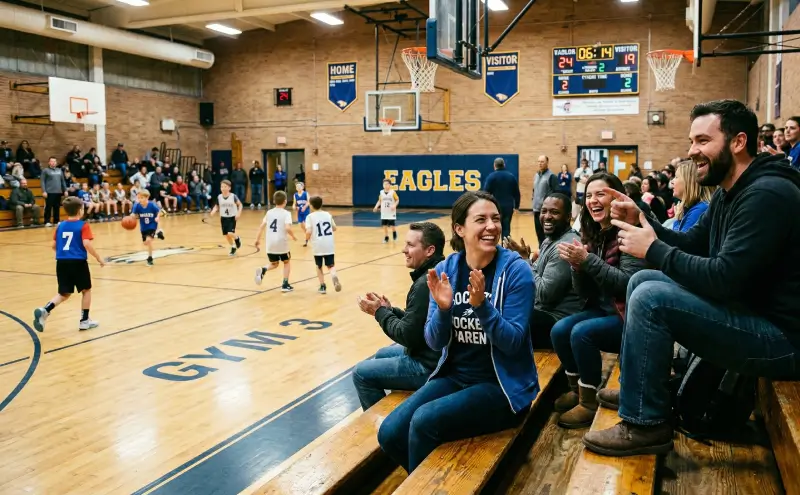
Parents sit together, regardless of whether their child is starting or coming off the bench. They cheer for defensive stops as enthusiastically as made baskets. They celebrate assists as much as scoring. They encourage players who make mistakes instead of groaning or showing visible frustration.
You’ll hear positive, general encouragement rather than specific instructions. “Great effort!” instead of “Shoot the ball!” “Stay focused!” instead of “Watch number 23!” “Let’s go, team!” instead of “Come on, you’re better than this!” The difference might seem subtle, but the impact is massive.
You’ll see parents congratulating the other team after games, win or lose. They model good sportsmanship because they understand that how you handle both victory and defeat teaches children life lessons that extend far beyond basketball. They maintain perspective about where youth basketball fits in the bigger picture of their child’s development.
Your role in building positive culture
You don’t have to wait for every other parent to get on board before you start modeling positive sideline behavior. Culture change starts with individual commitment. When you consistently demonstrate the right approach, you give other parents permission to do the same.
Be the parent who arrives early to help set up. Be the parent who thanks the officials after games. Be the parent who congratulates players on both teams for their effort. Be the parent who keeps conversations positive even after tough losses. Be the parent who supports the coach publicly and addresses concerns privately.
Your child is watching you more closely than they’re watching the game. They’re learning how to handle competition, adversity, success, and disappointment by observing your reactions to those same experiences. Make sure you’re teaching the lessons you actually want them to learn.
The long-term benefits
Teams with positive sideline culture produce players who love the game, respect authority, support teammates, and handle pressure well. These players continue playing basketball longer because they associate the sport with positive experiences rather than parental pressure and sideline drama.
More importantly, they develop character traits that serve them throughout life.
They learn that external validation matters less than internal commitment to excellence. They understand that supporting others’ success doesn’t diminish their own. They know that authority figures deserve respect even when you disagree with their decisions. They recognize that how you handle adversity matters more than whether you avoid it.
Be the parent your child needs
Creating positive sideline culture isn’t complicated, but it requires discipline. You have to control your emotions, support the process, and trust the coaches you’ve entrusted with your child’s development. You have to recognize that your role is to love and encourage, not to coach and critique.
Every game gives you a chance to either build or damage your child’s basketball experience. Every comment you make either supports team unity or creates division. Every reaction you show either models emotional maturity or demonstrates that winning matters more than development.
Choose wisely. Your child’s experience depends on it. The team’s culture depends on it. And ultimately, the lessons your child learns about handling competition, supporting others, and responding to authority depend on how you show up in those bleachers.
Be the parent your child needs you to be, not the parent who makes their athletic experience harder than it needs to be. That’s how you create positive sideline culture, one game at a time.